On the south-west side of Hạ Long City it is Tuần Châu Island, a schist island, very pretty, with a luxuriant forest. It has an area of 220 ha, and to the east and south are two beaches endowed with very white and fine sand. In 1962, Hồ Chí Minh visited Hạ Long Bay and made a stop here for vacation. Nowadays, Tuần Châu Island is one of the most attractive destinations in Hạ Long City.
Tuần Châu is in an important position at the entrance of the waterway system of Thăng Long, Bặch Đằng and Vân Ðồn, and this is why it was formerly a military watch station. The Office of Feudal Customs was also installed there.
The island also has many archaeological sites pertaining to the ancient Hạ Long culture from 3,000 to 5,000 years ago.
One can go to Tuần Châu Island via the 2-km cement road from the mainland. Investments have been poured into the island to turn it into a modern tourist resort. It includes such fascinating extras as the dolphin, sea lion, and seal-performing club, animal circus club, golf court, cultural-sports center, beach, rural market, ornamental fish lake, villas in Hill 1 and Hill 2, guesthouses, five 80-room villas by the beach. The ensemble of five restaurants and one round house built in the pagoda motif can serve up to 500 guests at the same time.
In Tuần Châu, the octagonal house where President Hồ Chí Minh rested when he visited Hạ Long now became his memorial site. Tuần Châu Island is expeditiously putting the finishing touches to its construction works so that they can be made available for the 2003 Hạ Long Tourism Year. (From www.halong.com)
Bai Chay is a resort located along the coast of Halong Bay. This is a windward ocean resort which has a year round average temperature of 20oC (68oF).
Bai Chay is a low gently sloping range of hills that runs along the sea for more than 2 km. Blended in among the pine trees are large hotels and small villas with distinguished architectural styles. Traveling down the asphalt road along the coast, visitors see long white stretches of sand and green rows of Casuarina trees, tucked under which are small family-run restaurants. After swimming at the beach, tourists can enjoy cold drinks and cool off in the breeze that sweeps in from the sea.
Most of the islands on Ha Long Bay are limestone and were formed over 500 million years ago, and are massed in the southeast and southwest. The schist islands scattered in the southeast have an average height of between 50-200m, and have a rich covering of flora.
Within the islands of the Bay there are hundreds of beautiful caves of different shapes and sizes, including many famous names such as Thien Cung, Dau Go, Sung Sot, Tam Cung and Bo Nau. Some of them are archaeological sites retaining tangible archaeological evidence, such as Dau Go, Bo Nau, Sung Sot, Soi Nhu, Tien Long, Me Cung, and Trinh Nu caves. (From http://www.halong.org.vn)
Ha Long literally means descending dragon(s) and according to local myth, the story goes as follows:
Long ago when their forefathers were fighting foreign invaders from the north, the gods from heaven sent a family of dragons to help defend their land. This family of dragons descended upon what is now Ha Long bay and began spitting out jewels and jade. Upon hitting the sea, these jewels turned into the various islands and islets dotting the seascape and formed a formidable fortress against the invaders. The locals were able to keep their land safe and formed what is now the country of Vietnam. The Dragon family fell so much in love with this area for its calm water and for the reverence of the people of Vietnam that they decided to remain on earth. Mother dragon lies on what is now Ha Long and where her children lie is Bai Tu Long. The dragon tails formed the area of Bach Long Vi known for the miles of white sandy beaches of Tra Co peninsula
This myth is in line with the Vietnamese myth of their origin Con Rong Chau Tien. This myth describes the union between a king (representing the dragon) and his bride (representing a goddess) giving birth to 100 children which are the ancestors of the Vietnamese people. The Ha Long myth illustrate the Vietnamese belief of their origin and the fact that throughout their history, they are aided by their ancestors, the dragon and the gods, in the defense of their land.
Halong Bay is located in the Northeast of Vietnam, belonging to QuangNinh Province. It is in the coastal area stretching from 1060 56’ to 1070 37’ east longitude and 200 43’ to 210 09’ north latitude. To the west and northwest, Halong Bay stretches from Yen Hung District, and includes the large urban areas of Halong City and Cam Pha Town, as well as Van Don Island District. To the south and southeast, it is adjacent to the western Tonkin Gulf and to the west and southwest lies Cat Ba Island in the province of Hai Phong. On the world map, Ha Long Bay borders to China in the north and in the east it is adjacent to the East Sea.
In 1962, the Ministry of Culture and Information classified Halong Bay as a National Landscape Site, covering an area of 1,553 km2 with 1,969 islands. Halong Bay has been recognized twice by UNESCO as a World Heritage Area for its universal values of landscape, geology and geomorphology, respectively in 1994 and 2000, an area of 434 sq. km. including 775 islands.
The area inscribed by UNESCO (the Protected Area I - the Core Zone) is bound by Dau Go Island in the east, Ba Ham Lake in the south and Cong Tay Island in the east. The Protected Area II - the Buffer Zone is identified by the shore of the Bay running along the National Highway No. 18A, from the Gasoline Warehouse B12 in Cai Dam Precinct to the km.11 marker in Quang Hanh Precinct, Cam Pha Town. The Protected Area III - the Hinterland Zone is the sea or mainland area surrounding the buffer zone, including the area adjacent to the Cat Ba National Park of Hai Phong City. - Climate is featured humid tropical charactor, including two distinct seasons: hot, humid with much rainning in summer and cold, dry in winter. The average temperature ranges from 150 – 250C with annual average rainfall of 2,000 – 2,200mm/year. Halong Bay has a typical tidal time (tidal amplitude ranges from 3.5 – 4.0m. The degree of salt in the sea water ranges from 31 – 34.5% in the dry season and decreases in the rainy season.. (From http://www.halong.org.vn)
Lenin Park, including the large lake in the center, was once Hanoi's dumping ground for household waste. Originally called Seven-Hectare Lake, the area lacked any appeal until after the French were defeated. Ho Chi Minh adorned the grounds around the lake with gardens, paths, statues and even an area for theatrical performance. The newly named Reunification Park became, and still is, one of the most beautiful parks in Hanoi. It was later renamed Lenin Park when the then Soviet Union befriended Vietnam during the American War. Every morning it fills with joggers and every evening with couples. Property Information by Wcities
From prehistoric tools to dynastic thrones to a bust of Uncle Ho, the Vietnam History Museum showcases items that mark the country's historical developments. The second floor displays more than 50 sets of remains from the Champa Kingdom, which flourished in central Vietnam between the 2nd and 15th centuries. A hall packed with detailed seals, stone tablets and sculptures of mythical creatures provides a glimpse of dynastic life. As descriptions of exhibits are brief, a local escort is recommended.
Property Information by Wcities
For nearly 50 years, the significant achievements in scientific research and propagation as well as external activities, the National Museum of Vietnam History has established its prestige and status in contributing to the development and integration among domestic and international museums. Thus, the Museum has been awarded many noble medals by the State:
- Third-grade Labor Medal
- First-grade Labor Medal
- Third-grade Independence Medal
- The Government’s Challenge Banner.
Item from Vietnam History Museum
Item from Vietnam History Museum
Item from Vietnam History Museum Item from Vietnam History Museum Item from Vietnam History Museum
A short taxi or motorbike ride outside of Hanoi's center brings you to the Museum of Ethnology. The French-designed building and surrounding grounds, which simulate life in the provinces, warrant the trip even before you step inside. The museum displays a dizzying array of artifacts from all over Vietnam. Brief descriptions in French, English and Vietnamese of tools, clothing and recreated homes provide a sketch of several Vietnamese ethnic minorities. A craft shop sells books, bags and other items from various ethnic communities at reasonable prices.
Property Information by Wcities
Viet-Korea Day in Vietnam Museum of Ethnology
What is new at the Vietnam Museum of Ethnology?
The Vietnam Museum of Ethnology is a valuable centre for the exhibition and the preservation of cultural heritages of the 54 ethnic groups in Vietnam. To date, the Museum has collected 15,000 artefacts, 2,190 slides, 42,000 photographs, 237 audiotapes, 373 videotapes and 25 CD-ROMs. It is also a centre for ethnographic research employing many experts on the different ethnic groups. People come to the Museum just not to visit or entertain, but also to learn about these ethnic groups, their cultural diversity and the uniqueness of each group and region, as well as traditional values throughout the Vietnamese country. For this reason, national and international visitors, children and students, professionals and non-professionals are attracted to the Museum.
The artefacts of the Museum are not only priceless antiquities, but many are everyday objects, such as knives, baskets, garments, flutes, pipes and mats. These objects reflect tangible and intangible cultural heritages of the communities, representing lives and creative activities of the people. Thus, artefacts of the Museum are so varied that they are organised into different collections. The Museum has 54 collections of each individual ethnic group. Functionally classified, there are collections of clothing, jewellery, of agricultural tools, fishing instruments, weapons, household utensils and musical instruments. In addition, there are collections of artefacts related to the various religions, beliefs, wedding ceremonies, funeral ceremonies and other social and spiritual activities. Based on the specific collections, the Museum organises exhibitions and publishes books and catalogues in different formats in order to meet the needs of various audiences of different backgrounds.
The two-floor building, which is inspired by the Vietnamese famous and ancient bronze drum, holds the permanent collection. A granite bridge leads from the main gate to the entrance of the exhibition, creating a feeling of going up to a house-on-stilts which is very popular in many areas of Vietnam. On entering the Museum, the granite floor is decorated with dark tiles arranged in the shape of an S. This decoration symbolises the shape of the Vietnamese coastline, the earth is in dark colour and the ocean is light grey.
The Vietnam Museum of Ethnology has been designed to reflect the country's technical and scientific progress as well as the Museum’s objectives. First of all, the Museum was created for everybody. This is reflected in both the architecture and the display techniques. The Museum has ramps for physically challenged people and an electric elevator allowing access to the second floor. All steps have handrails that are very comfortable for older people. Learning from the experiences of many museums in the world, the museum texts are not in capital letters but small letters so that it is easy for people of different ages to read them. Panels are presented at reasonable heights, for both adults and children. In addition to objects, there are photographs, texts, videos and many reference materials, all of which can be brought into full play to inform visitors with different levels of education and different needs.
The objects are displayed as centrepieces because they reflect the everyday lives of the people. The Museum’s consistent point of view is that the display should be simple, so that visitors can admire the beauty and finesse of each ordinary and simple item. Although there are no illustrative paintings in the Museum, photographs and videos are used to illustrate people’s lives.
A restricted number of 700 objects and 280 photographs are displayed in the Museum’s permanent exhibits, which helps visitors avoid being distracted by an over-representation of artefacts. The different collections are displayed according to language groups and territories. Most of the objects presented in the 97 showcases are original. The showcases have either one-sided windows or four-sided windows, depending on the artefacts presented. For example, some cases present many artefacts; others have only one significant object. Among the showcases in the display, 50 cases are accompanied by texts. Each object has a label denoting its name, the ethnic group and the place where it was created. There are also mannequins, maps, graphs, hardcover books, photographs, videotapes, cassette tapes, models, and 33 section panels. Though the Museum is not large, dioramas highlight certain customs or cultural features of ethnic groups.
Adding to the many layers of information available to visitors, the museum provides hundreds of panels composed of explanations, illustrative photographs and maps. Unfortunately, because of limited space, the texts are condensed. Not only do the texts and the object labels serve a national audience, they are also translated into English and French in order to facilitate international visitors. Thus, visitors experiencing the museum, even without a tour guide, are able to understand the main messages of the displays.
New technical solutions have been used throughout the Museum, such as focused lights. The light radiates inside and outside the glass windows focusing on the most significant aspect of each object in order to set off its beauty and draw visitors’ attention. In addition, a ventilation system has been installed within each display area to protect the objects from mould and decay.
The outdoor exhibition area is only large enough for the most popular architectural styles to be represented. Already presented are the Ede long house, the Tay stilt house, the Yao house half on stilts, half on earth, the Hmong house whose roof is made of pomu wood, the Viet house with tile roof and the Giarai tomb. There are future plans to present the Bahnar communal house, the Cham traditional house and the Hanhi house made with beaten walls. Between the houses, there are trees indigenous to the area of each house, zigzagging paths and a meandering stream crossed by small bridges. The outdoor museum is being realised step by step.
The Hồ Chí Minh Mausoleum (Vietnamese: Lăng Hồ Chí Minh) is a large memorial to Vietnamese independence leader Hồ Chí Minh. It is located in Ba Ðình Square in Hà Nội.
Despite Ho Chi Minh's request to be cremated, like communist leaders before him, he was embalmed and put on display. A visit to the mausoleum is a somber experience in the spiritual center of Vietnamese independence. The guards are not terribly friendly and Uncle Ho looks a little yellow, but the quiet line that forms to view his body is a vision of respect and may even feature a few tears. Ho's mausoleum is open only in the mornings, every day except Monday and Friday. The mausoleum sits in front of Ho's stilt house.
Property Information by Wcities
Ho Chi Minh is most famous for leading the Viet Minh independence movement from 1941 onward, establishing the communist-governed Democratic Republic of Vietnam in 1945, defeating the French Union in 1954 at Dien Bien Phu. He led the North Vietnamese in the Vietnam War until his death; six years later, the war ended with a North Vietnamese victory, and Vietnamese unification followed. The former capital of South Vietnam, Saigon, was renamed Ho Chi Minh City in his honor.
A video from a traveler.In this video,Ho Chi Minh mausoleum is very wonderful place.
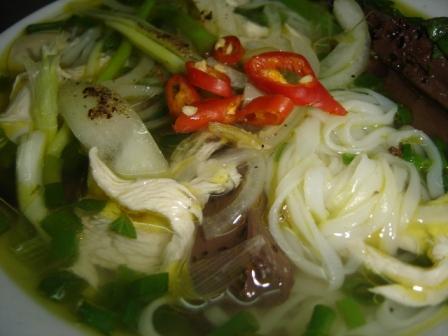
Let’s start our tour in 42 Quán Thánh Street for our morning Phở Gà (Chicken noodles) which costs about 7,000Vnd. Keep going to Ngõ Đồng Xuân where we can try the best 7000Vnd Bún Chả (Grilled pork with noodles and Asian herbs) and Phở Tiếu (Roasted pork noodles with chilli, dried onion and Asian herbs) and a 3000Vnd Beer Hơi. Café Năng on Hàng Bạc Street is the coffee stop of your day: 5000Vnd for great coffee or juice. If you are a seafood fan, then try out the seafood around Trúc Bạch Lake, where you can sit on the pavement looking at the Lake and the action passing by. These small restaurants should only cost you about 120,000Vnd per person for crab, scallops and some shrimps. Don’t forget to check out Quất Café which is closeby, very nice and always cool with both ceiling fans and wall fans and good coffee, you'd spend about 4000Vnd. Phở Cuốn (Spring rolls) Vinh Phong at 40 Ngũ Xá is a good place to go for a snack. Here, they serve different kinds of Noodles, and prices start at 1,500Vnd for one spring roll. Stir fried beef and spinach served with crispy noodles is a good dish to try and costs about 20,000Vnd for 2.
On your return to the city centre, try 7000Vnd Bún Riêu (Crab soup with herbs) on Thi Sách Street which is delicious, then go straight ahead and turn left to have Bánh Mỳ (Beefsteak) and Bún Bò (Beef noodles)on Hoà Mã Street. This place is always busy and you have to take good care of yourself because of the slippery floor.The owner is from Hue and prices start at 10,000Vnd for Noodles and 18,000Vnd for beefsteak. And Café Báo is a good choice near by which is quiet and has good juices.
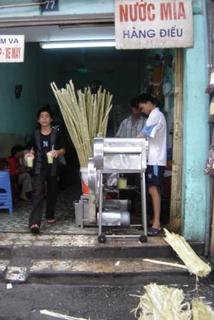
Mía Đá is good on a hot day; this is refreshing sugar cane juice and only costs you 2000Vnd in Hàng Điếu Street. Bún Bò Nam Bộ(Stir fried beef and beanshoot with noodles and Asian herbs with Southern's style) is a one dish choice for you, only 18,000Vnd. Photo cafe is a nice place to go to have a bit of a chat with friends, which is on Quán Sứ Street. There are lots of great pictures and greenery surrounding.
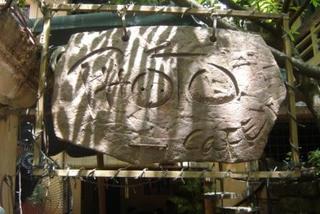
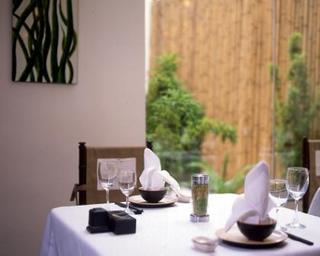
End your day at Wild Lotus for a drink to cool you down after a long day wandering around, and then go to Wild Rice to enjoy your evening with excellent food and great atmosphere. Don’t forget to try out the soft shell crab! This place will cost you about 300,000Vnd for your meal but you do get what you pay for!!!
Hope this information can help anyone who wants to try out the Vietnamese food in Hanoi. These places are a mix of street stalls, cafes and upmarket restaurants.
Thank to Mark Lowerson from Sticky Rice for some of the nice pictures.
(all information and picture of this post from http://vietnamesegod.blogspot.com) (Thank to http://vietnamesegod.blogspot.com for writing this post)
Some videoclips of Ha Noi Food
How to make Pho is the content of this clip.You can see many vietnamese people waiting to eat Pho.Pho is really very delicious.I love Pho.
How to make bun rieu cua.I do not think you can understand what people in clip say.But i think you can make "Bun rieu cua" because it is very easy to make.
The National Dance Academy is located in the suburb of Ha Noi, approximately 12 km from the center of town. The Academy was once supported by the Soviet Union and East Germany. According to the instructional staff (some of whom are foreign trained), many of the academy's alumnus have gone on to become famous performers and choreographers. Many have toured all over Asia and in Europe.
Each year, the academy's staff hold auditions all over the country. Only the best and the brightest are chosen to join the academy. Usually, the candidates are selected when they're 7 or 8 years old, but sometimes, candidates are chosen on a walk on basis in their early teens. The government supports the students with a meager scholarship and housing right on site. The curriculum includes an academic regiment with a strong emphasis on the various types of dance from ancient Cham and Hmong dances to Ballet and Modern dance. The academy is very similar to the performance academy in the U.S